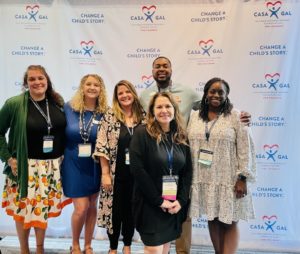
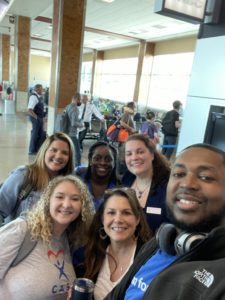
Earlier this summer several of our staff and board members had the opportunity to travel to St. Louis for the 2023 National CASA conference. The conference theme this year, “Strong Families. Strong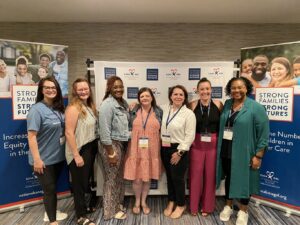 Futures.” provided participants with opportunities to dive in and learn about the tragic realities of living in foster care and why it is so vitally important to the well-being of the children we serve to support the whole family.
Our staff and board members in attendance shared some of the ideas they felt were most impactful and important to bring home with them.
Children in foster care are more likely to die, go to jail, be sex trafficked, or become pregnant than they are to attend college.
30-35 percent of our youth in care are LGBTQIA+. They are overrepresented and very underserved! -Crystal Vickmark, Executive Director
If we don’t support families, we will inevitably end up with more children in care. There are core beliefs about families (the family is incapable of taking care of their children), youth (they are exhibiting bad behaviors that cause more issues), and child welfare staff (there is not enough support) that create a never-ending cycle. Breaking this cycle at any place will lead to change.
Consistency in case workers is extremely instrumental in successful reunification for children and their families. 74 percent of cases that have only one caseworker throughout the case end in reunification. That number drops to 13 percent if a case has two or more caseworkers. -Jerrilyn Dailey, Board Member
CASA volunteers can help advocate by helping balance power in meetings, at court, or in other environments where children or parents may feel they have to fight, flee, or conform. We have to examine how our families show up to meetings and help them feel comfortable enough to speak about their needs. Otherwise, no matter the service, the problem is not fixed, and further trauma is created.
The biggest gap in the welfare system is communication. Many have been trained in trauma-informed care but not in the necessary communication skills to support children and families. Each person involved in the system should be honest, transparent, empathetic, and have the ability to actively listen. -Eugenia Marks, Advocate Supervisor
It is a privilege and not a right to be in the lives of these children and their families.
One in 100 black children’s parental rights have been terminated since the Adoption and Safe Families Act of 1997. This is an astronomical number and one that should help us rethink the timelines that this law put into place.
Every decision we make has the chance to affect generations of people in one family. The recommendations we make on our cases have the potential to affect children and their families, but we must also be mindful that these can also ripple to affect future generations of that family as well. -Shelley Hart, Program Director
We need to address poverty to radically change our approach to child welfare. Changing our mindset to empower, equip, and heal is essential to course-correct the child welfare system.
Our language matters. What we call things has a massive impact on how they are perceived and the action that follows. -Elise de Waal, Board Treasurer
We have to do a better job of seeing the youth we serve as resources, rather than just objects or recipients of our support. When we look to develop or change programs, if we aren’t seeking the input and wisdom of the youth the program is intended for, then we are missing out on valuable insights. Sometimes the best ideas come from brainstorming with youth, rather than just for youth.
If we care about children, we have to also care about their families. When we remove children from their homes, it is always traumatizing for them. Children need belonging first, and then services and treatment second. Relationships and belonging are what make healing happen. -Sadie Perkins, Communications and Older Youth Specialist
Set an intention to read “A Place Called Home” by David Ambroz.
These kids are placed into a system that is not designed for them.
The importance of being an ethical storyteller. We are entrusted with their stories, and we have a responsibility with how and where we share it. -Courtney Voigt, Director of Development and Marketing
As Shelley pointed out, it truly is a privilege to be in the lives of the children and families we serve in our community. The 2023 National CASA Conference was a powerful reminder of this privilege and inspired us to continue to join in the work of helping build strong families and a stronger future.

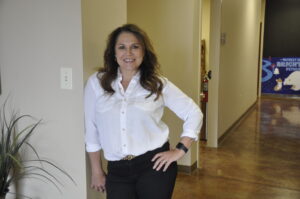
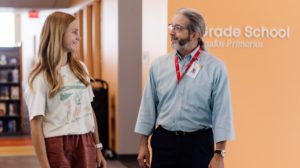
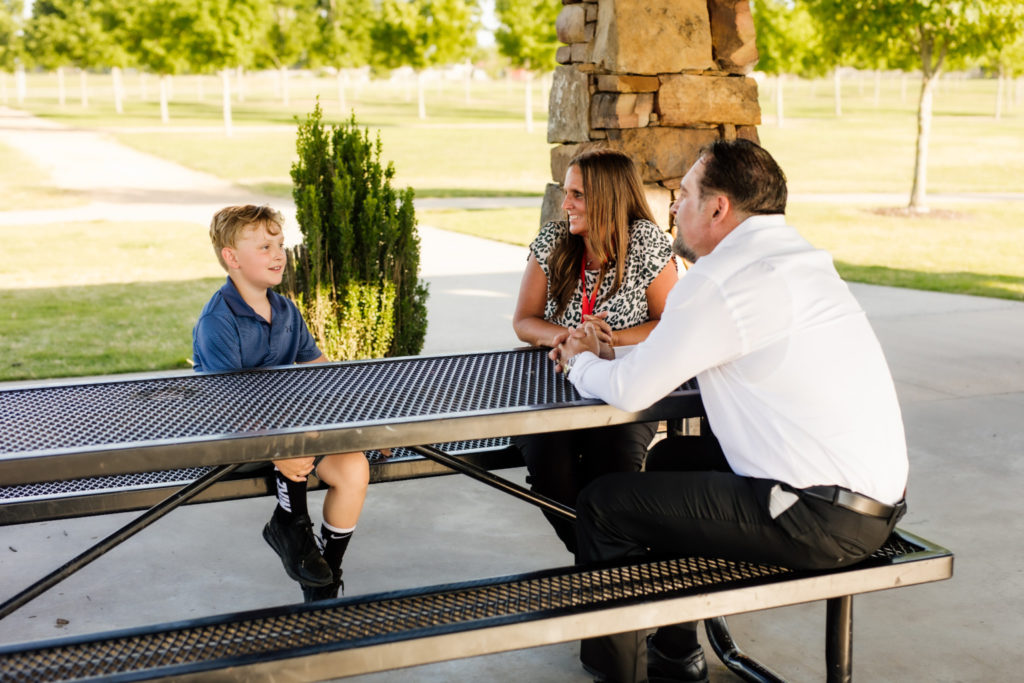
 finding family members and making those connections. Also connecting with resources in the family’s area. This could potentially be a new tool for our program and advocates to utilize to aid with family preservation. ” – Amanda Q.
 “For me as a social worker, I think I make a difference at CASA by helping advocates to see certain situations differently. Child welfare is never black and white. And emotions are high when a child is involved, certainly. But as we know, children are always better with their families if they are safe and care is taken. So, I help my advocates put things into perspective. Do we have a parent that has a bucketful of unresolved trauma? Let’s make sure there are services in place to work on that. Do we have a parent that is abusing substances? They are not bad people but have made some unfortunate choices. What do they need to do to stay sober? Do we have a house that is messy and unsafe? Does the parent have different standards of cleanliness than the advocate, is the parent depressed, do they lack the skills? How can we help them in that situation? Again, these cases are grey and will not always have the happy ending of a beautiful reunification story. But as a CASA supervisor, I use my social work skills to point my advocates in the direction of a strengths-based advocacy, looking at what people are doing right and how we can build upon that to effect change as opposed to focusing purely on the negative aspects.”
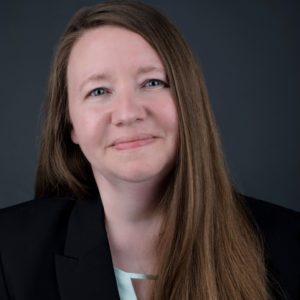 “One of the most valuable things I have gained and enjoyed from getting my degree and license in Social Work is truly listening to those that I am working with. Letting people talk, giving them the space and time to explain their situation, how they are feeling and how they got to this place. I’ve learned that this not only builds trust but helps people feel heard and motivates them to change their situation and want to be a healthier parent emotionally and physically. There are so many times I have met with families and no one has taken the time to just listen and understand, and I think that can be one of the greatest things we can give them. ”
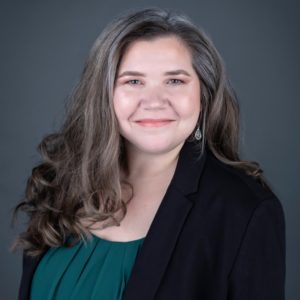 “I think I have helped some of my advocates create healthy boundaries with the families, workers, foster parents they are working with. I think this is impactful because it helps prevent burnout.”